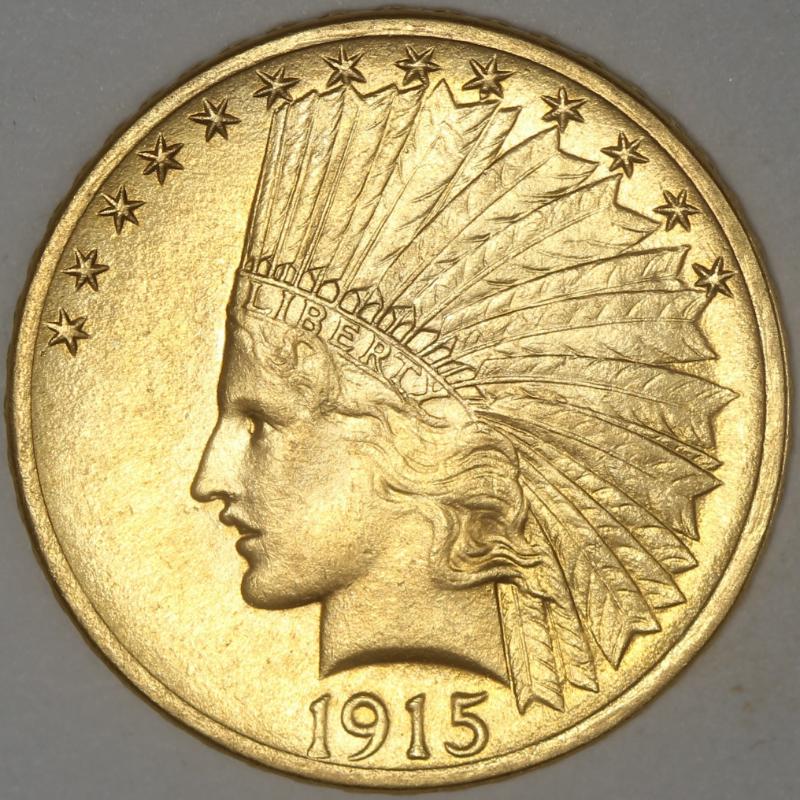
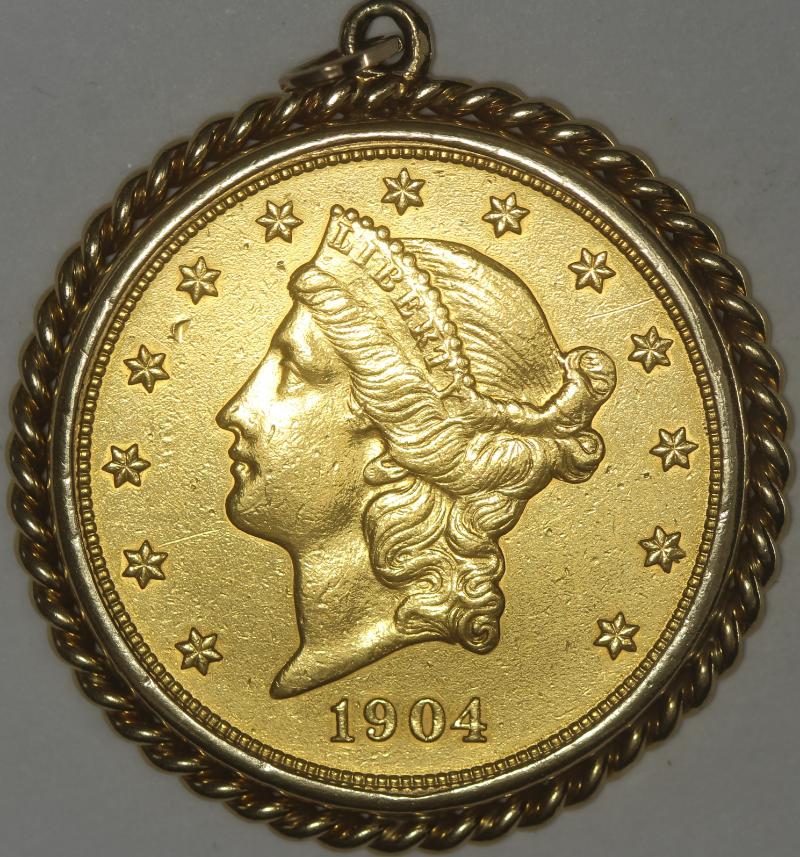
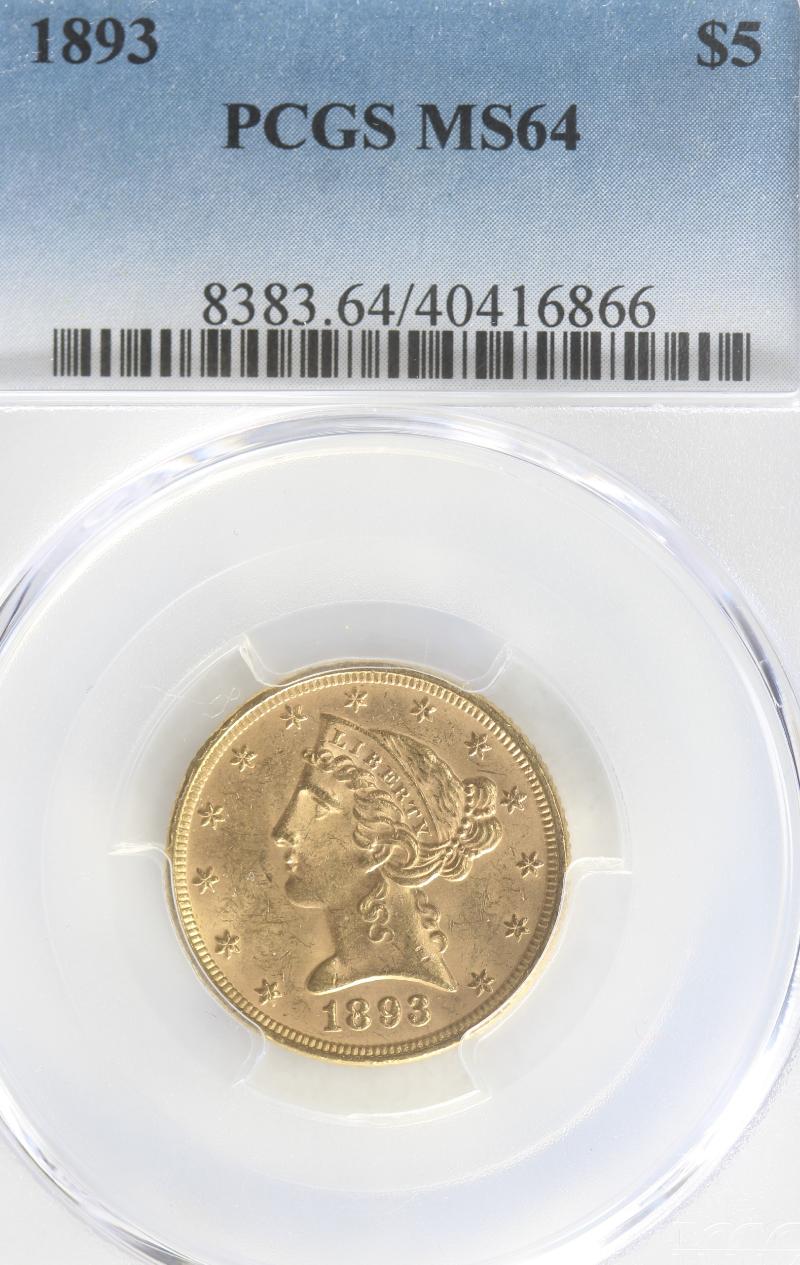
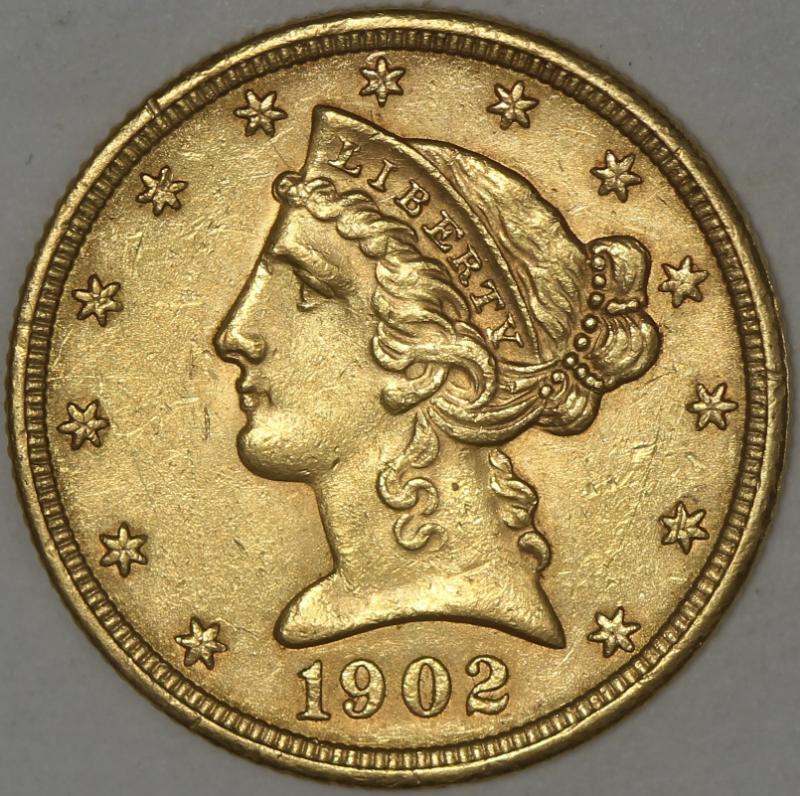
1915 Indian Uncirculated. NGC believes this coin to be a counterfeit, but unlike most counterfeit coins, it's weight is accurate (16.72 grams) and the metal composition is .900 gold. What would be the motivation or incentive for a counterfeiter to create such a common coin with little value over its precious metal content (such as the 1915 Indian $10)? The answer goes back to the law of 1933 banning the private holding of gold (which was not formally rescinded until 1974.) The ban carried an exception that allowed private citizens to own a "small number" of gold coins ostensibly with numismatic value. So to circumvent the gold ownership ban, it was common for people holding "illegal" gold bars at the time to turn them into "legitimate" gold coins, all in an effort to give the appearance of complying with the law. The present coin fits this description perfectly, and its link back to the 1933 law makes for fascinating history. In any event, this gold offering contains .484 ozt actual gold weight. At gold spot of $3,300 per troy ounce, this amounts to $1,600 of gold value. But it may be the coin's novelty factor that creates an even greater reason to own it. (For more information, see the article: "1915 Indian Head Eagle" in The Numismatist, Aug 2022.) (Image)